

The Whitsunday Islands are the kind of place that makes you pause and wonder if you’ve just stepped into a postcard. Set in the warm heart of Queensland’s Great Barrier Reef, this stunning archipelago of 74 islands is a true tropical escape.
With soft white sand, sparkling turquoise waters, and vibrant marine life, the Whitsundays are a paradise for beach lovers, adventurers, and anyone craving a break from everyday life.
Where Are the Whitsundays?
The Whitsunday Islands sit off the coast of tropical Queensland, about 900 kilometers north of Brisbane and 600 kilometers south of Cairns. They lie in the very center of the Great Barrier Reef, which makes them one of the best bases for exploring both the reef and the islands themselves.
The mainland entry point is Airlie Beach, a relaxed seaside town with a buzzing main street, lagoon, and plenty of restaurants and cafes. This is where most tours and transfers begin. From Airlie Beach, boats, ferries, and yachts head out daily to the islands.
Hamilton Island, one of the most popular spots, also has its own airport. This means you can fly directly from major Australian cities such as Sydney, Melbourne, and Brisbane without needing to stop at the mainland first. Some visitors choose to split their time—staying a few days in Airlie Beach before heading to an island resort.
A Playground of 74 Islands
The Whitsundays are made up of 74 islands, but only a handful have resorts, towns, or facilities. The majority are uninhabited and preserved as part of national parks. This mix gives travelers a rare balance: untouched wilderness alongside stylish, comfortable stays.
Hamilton Island is the largest inhabited island and the most developed, offering everything from golf courses to fine dining. Hayman Island is known for its luxury resort, while Daydream Island is loved by families for its kid-friendly atmosphere. Long Island is quieter and geared toward nature lovers.
Then there are islands like Hook and Whitsunday Island itself—protected national parks with walking trails, campsites, and hidden beaches. Spending time in the Whitsundays means you can wake up in a world-class resort one morning and the next day set foot on a wild, deserted stretch of sand that feels like it’s yours alone.
Whitehaven Beach and Hill Inlet
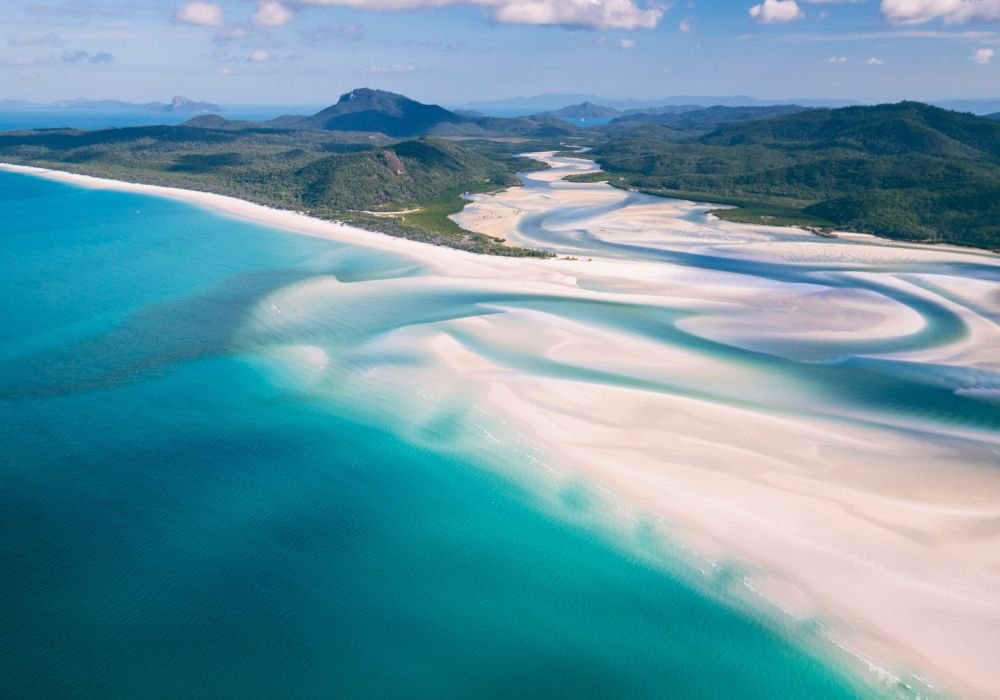
Whitehaven Beach is often described as the jewel of the Whitsundays, and for good reason. Its sand is 98% pure silica, giving it a dazzling white color that doesn’t retain heat, so you can walk barefoot even on hot days. The beach stretches for over seven kilometers, leaving plenty of space to relax, swim, or enjoy a picnic without feeling crowded.
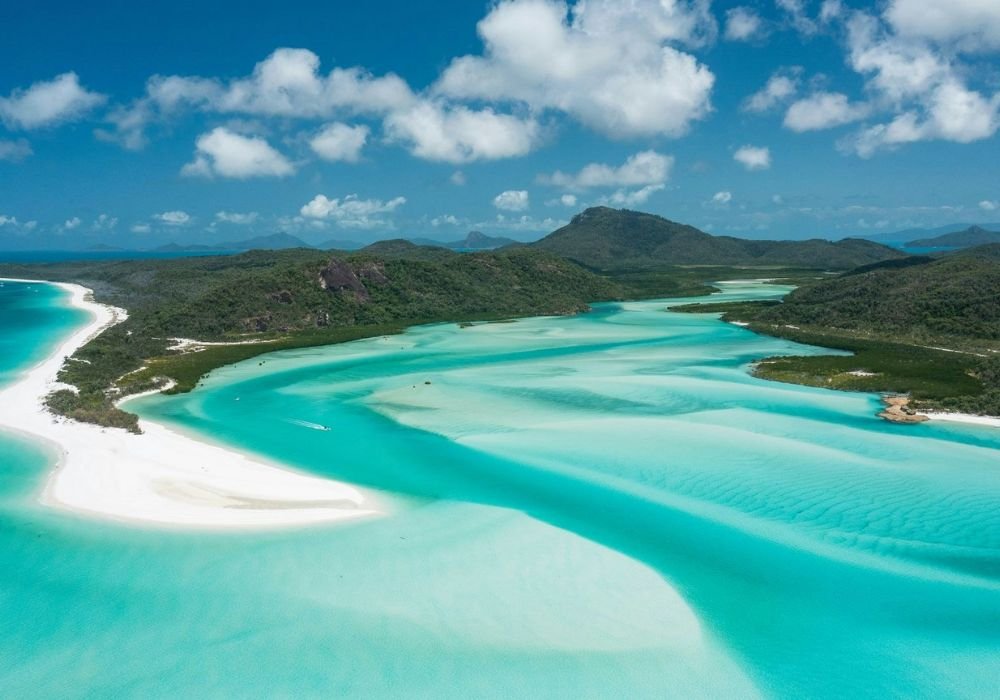
At the northern end of Whitehaven lies Hill Inlet, where the tide shifts the sand and water into swirls of turquoise, aqua, and white. The best way to see this phenomenon is from the Tongue Point lookout, a short hike that rewards you with sweeping views of the inlet below. For another perspective, many travelers choose a scenic flight, which reveals the patterns from above in all their glory.
This part of the Whitsundays is protected and untouched, so you won’t find hotels or big resorts here—just raw natural beauty. It’s a reminder that some places are best left exactly as they are.
Life Beneath the Water
The Whitsundays aren’t just about what you see above the surface. Being part of the Great Barrier Reef Marine Park, the islands offer incredible access to coral reefs teeming with marine life.
Snorkeling is available in many locations, often just a few meters from shore. You’ll find clownfish darting among anemones, sea turtles gliding gracefully by, and brightly colored parrotfish chomping on coral. For certified divers, there are deeper reefs and walls to explore, where you might encounter reef sharks or manta rays.
One of the most iconic sights is Heart Reef, a naturally formed coral bommie in the perfect shape of a heart. It’s a protected area, so you can’t snorkel or dive there, but flying overhead in a helicopter or seaplane offers an unforgettable view. This single spot has become a symbol of the Whitsundays, especially for couples looking for a romantic touch to their trip.
When to Visit
The Whitsundays enjoy a warm, tropical climate all year, but the experience changes with the seasons.
- Winter (June–August): Dry, sunny, and pleasantly cool. Daytime temperatures average around 23°C, making it comfortable for hiking and exploring. This is also whale season, when humpback whales migrate through the waters.
- Spring (September–November): Considered the best time to visit. The weather is warm but not too humid, seas are calm, and underwater visibility is excellent.
- Summer (December–February): Hot and humid with more rain and the occasional tropical storm. Still beautiful, but the heat and humidity can be intense.
- Autumn (March–May): Mild and quieter. This is a good option if you prefer fewer crowds and don’t mind the occasional shower.
In short, the Whitsundays are a year-round destination, but if you want calm seas, great snorkeling, and a good chance of clear skies, spring and early winter are your best bets.
Getting Around the Islands
Island hopping is what makes a Whitsundays trip so exciting. Boats, ferries, and yachts are the most common way to move between islands, with plenty of day tours available for those who want a guided experience.
One of the most unique options here is bareboating, where you rent your own yacht and cruise from island to island at your own pace. No license is required, and you’ll get a briefing before you set off, so it’s surprisingly accessible even for beginners. For many visitors, this is the ultimate freedom: waking up in a different bay each morning and snorkeling right off the deck.
For a bird’s-eye view, seaplanes and helicopters offer scenic flights over Whitehaven Beach, Hill Inlet, and Heart Reef. On land, most islands are car-free, so you’ll find yourself walking or using small resort shuttles. This adds to the laid-back atmosphere—there’s no rush, and everything moves at island pace.
Things to Do
The Whitsundays are all about variety. Outdoor lovers can take on hikes like the Honeyeater Lookout in Airlie Beach, Passage Peak on Hamilton Island, or trails through Whitsunday Island National Park. These walks reward you with sweeping coastal views and encounters with native wildlife.
Water sports are just as popular. Paddleboarding, kayaking, and jet skiing give you a fun way to explore bays and inlets. Sailing trips let you feel the wind in your hair as you glide between islands. For adrenaline, parasailing or scenic flights give a rush with unbeatable views.
Not everything has to be fast-paced. Many visitors spend lazy afternoons on quiet beaches, followed by a sunset cocktail at an island bar. Couples are drawn to candlelit dinners and starlit skies, while families love combining a snorkel trip with a beach picnic. Whatever your travel style, there’s something in the Whitsundays to match it.
Where to Stay
Where you stay in the Whitsundays depends on the experience you want.
Luxury Stays
Hamilton Island and Hayman Island are the go-to choices for travelers seeking luxury. From five-star resorts and infinity pools to fine dining, these islands promise indulgence. Hamilton even boasts its own golf course and marina, while Hayman is famed for exclusivity and personalized service.
Family-Friendly Options
Daydream Island is a favorite for families. Its relaxed vibe and attractions like the living reef lagoon give children the chance to learn and explore in a fun, safe setting.
Nature Escapes
For those who want a closer connection to the environment, eco-lodges and camping on national park islands are perfect. Whitsunday Island, Hook Island, and others offer designated campsites where you can fall asleep under a sky full of stars.
Mainland Base
Airlie Beach provides the widest range of accommodation, from backpacker hostels to boutique apartments. Staying here gives easy access to restaurants, nightlife, and tours, while still keeping you just a short boat ride from the islands.
Practical Travel Tips
Since the islands are part of the Great Barrier Reef Marine Park, it’s important to travel responsibly. Always use reef-safe sunscreen, avoid touching corals, and follow guidelines to protect this fragile ecosystem. Pack light clothing, swimwear, hats, and plenty of sun protection. Tours and transfers can sell out in peak season, so booking in advance is wise.
At Papilon Travels and Tours, we often guide travelers who are looking for trusted advice and personal support while exploring this paradise. If you’re searching for the top travel agents to plan your Australia vacation, our team is here to help design the perfect Whitsunday escape.
Conclusion
The Whitsunday Islands are a true tropical escape, blending pure white beaches, colorful reefs, and lush national parks. With 74 islands to explore, every visit offers something new—whether it’s sailing, snorkeling, or simply soaking up the views. This is Queensland’s paradise, where relaxation and adventure go hand in hand.
FAQs
Q: How many days should I spend in the Whitsundays?
A: A minimum of three days gives you time to see Whitehaven Beach, snorkel the reef, and enjoy some island time. A week allows a deeper experience, especially if you want to visit multiple islands.
Q: Do I need a boat license to charter a yacht in the Whitsundays?
A: No. Bareboating is popular, and you can skipper your own yacht without a license. Basic training is provided before departure.
Q: Can I camp on the islands?
A: Yes. Several national park islands have designated campsites. Bookings are required through the Queensland Government’s Parks and Forests website.
Q: What is the best way to see Heart Reef?
A: Heart Reef is a protected area and cannot be snorkeled or dived. The best way to see it is by helicopter or seaplane, which also gives you stunning views of the reef system.
Q: Are the Whitsundays family-friendly?
A: Absolutely. The calm waters, gentle beaches, and range of activities—from wildlife watching to paddleboarding—make it a great choice for families.
For more guidance in planning your dream trip to the Whitsundays, reach out to Papilon Travels and Tours—contact us anytime, and we’ll help you turn this tropical getaway into reality.


